
The Teeth That Helped Win the War
*A biography of Winston Churchill’s dentures*
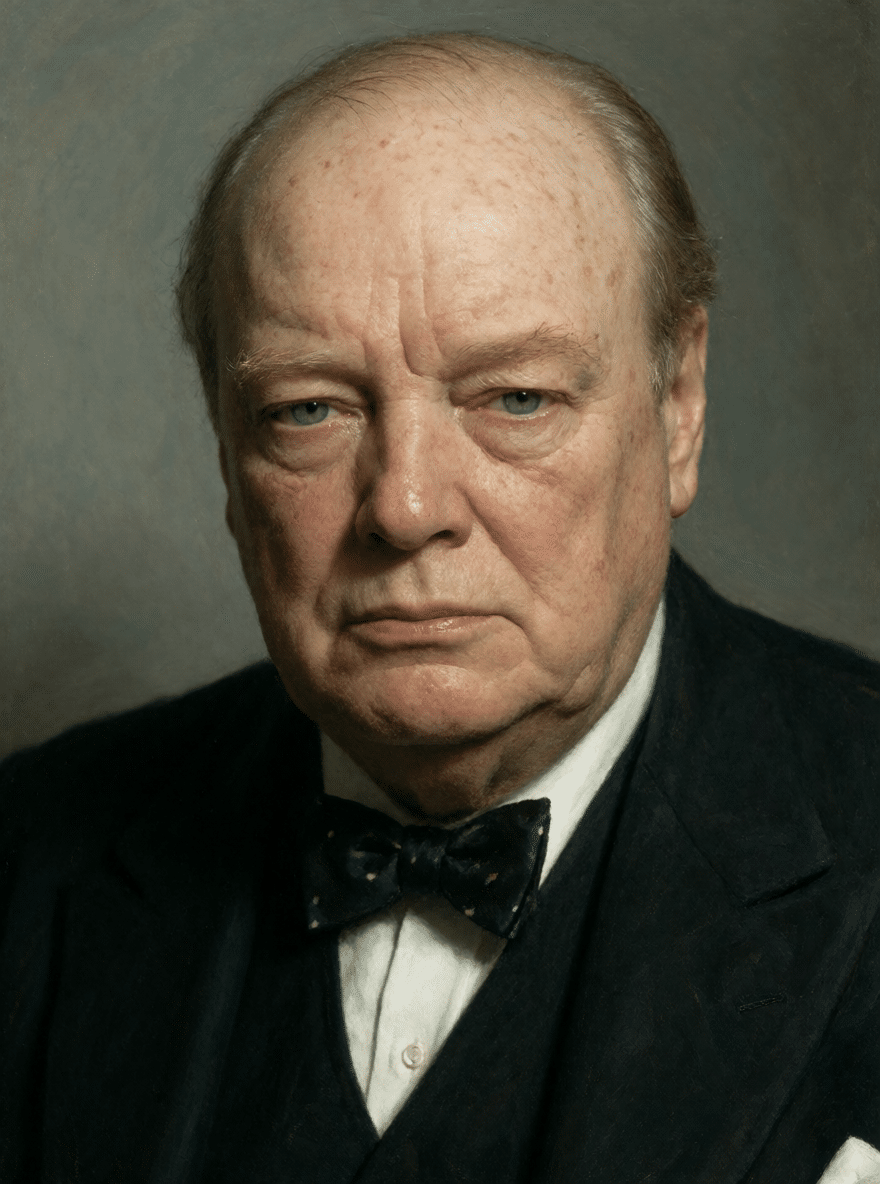
In the summer of 1940, as German bombs fell on London and the fate of Britain hung by a thread, the voice that rallied a nation came from a man whose most carefully guarded secret sat in his mouth. Winston Churchill’s famous wartime speeches — the ones that still echo through history — were delivered with the help of specially engineered false teeth. These were not ordinary dentures. They were precision instruments, designed to preserve the very speech impediment that made his voice unmistakable.
This is the story of those teeth, the men who made them, and the improbable role a set of gold-and-porcelain prosthetics played in one of the most consequential moments of the twentieth century.
Early Troubles
Churchill’s dental problems began long before he became a household name. As a boy and young man he suffered from poor teeth and gums. By his twenties he had already lost several. The discomfort was constant, and the effect on his speech was noticeable. He developed a distinctive lisp — a soft, slightly slurred quality to his “s” sounds that would later become one of his most recognizable traits.
Most people with a speech impediment try to correct it. Churchill did the opposite. Over time he came to see the lisp not as a flaw but as part of his public identity. When the moment came to replace the missing teeth, he insisted that any artificial replacements must leave that characteristic sound intact.
Multiple Sets and Extreme Precautions
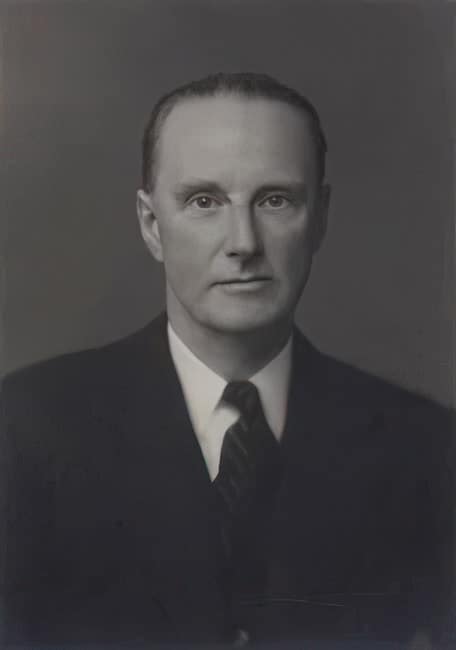
Churchill treated the dentures with the seriousness of a military asset. At any given time there were four identical sets in circulation: one in his mouth, one carried by his private secretary, and two held by Fish and Cudlipp as emergency backups. He rarely left home without a spare.
When Cudlipp received his call-up papers during the war, Churchill intervened personally. Accounts from Cudlipp’s family describe the prime minister tearing up the papers and declaring that the technician was more valuable in London repairing dentures than on the front lines. Whether the story has been polished in the retelling or not, the underlying truth is clear: Churchill regarded the reliable functioning of his teeth as a matter of national importance.
Temper and Flying Teeth
The relationship between Churchill and his dentures was not always harmonious. When bad news arrived from the front or political frustrations mounted, he had a habit of flicking the dentures out of his mouth with his thumb. Sometimes they flew across the room and struck the opposite wall. Derek Cudlipp later told his son that he could gauge the progress of the war by how far the teeth traveled.
The dentures required frequent adjustment and repair. Churchill was not gentle with them, and the loose-fitting design that preserved his speech also made them more prone to damage. Yet he never abandoned the special construction in favor of a more conventional, tighter fit. The voice mattered more than comfort.
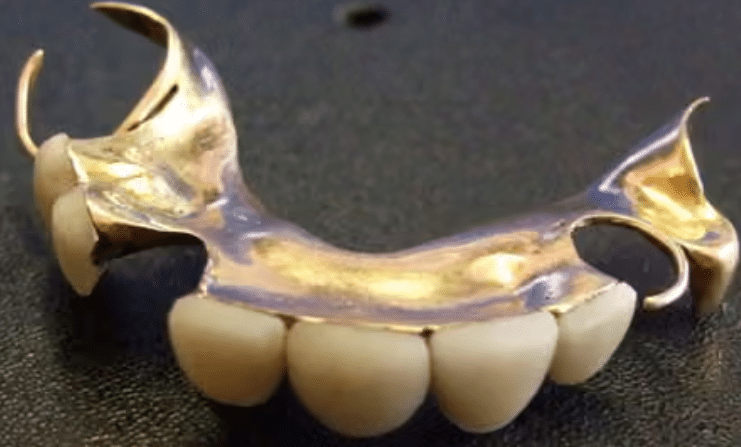
“According to his dental technician, Churchill’s temper could be measured by the distance his dentures flew across the room.”
The Voice of a Nation
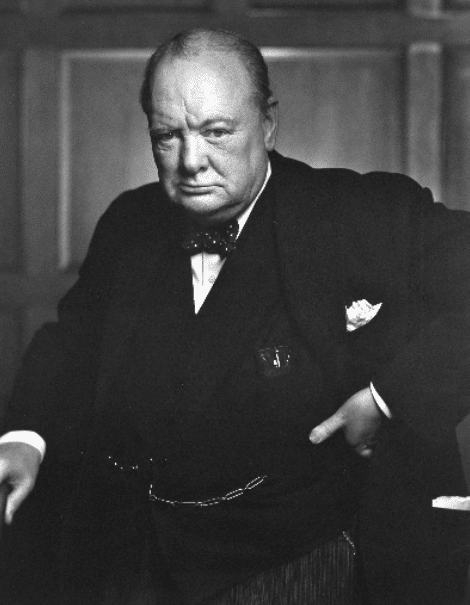
By the time Churchill became prime minister in May 1940, the dentures were already part of his arsenal. The speeches that followed — “Blood, toil, tears and sweat,” “We shall fight on the beaches,” “This was their finest hour” — were delivered with that carefully maintained lisp. Radio listeners across Britain and the free world came to recognize the voice instantly. The slight imperfection made it human, distinctive, and impossible to imitate perfectly.
Historians and museum curators have sometimes called them “the teeth that saved the world.” The phrase is affectionate exaggeration, but it captures something real. In a war fought as much with words and morale as with weapons, the instrument of Churchill’s oratory was treated with extraordinary care.
Later Years and Legacy
Even after the war, Churchill continued to rely on Fish. In January 1954, while serving his second term as prime minister, he wrote to the newly knighted dentist:
“I am very glad it fell to me to recommend you for a well-deserved honour. I enclose one set of dentures and I should be so much obliged if you would tighten them up a little for me. The others are working very well.”
One set is believed to have been buried with Churchill in 1965. Another resides in the Hunterian Museum in London, where it remains one of the most popular exhibits. A third set, kept by the Cudlipp family, was sold at auction in 2010 for £15,200 and again in later years for even higher sums. Collectors and institutions continue to regard them as more than medical curiosities; they are tangible links to the voice that helped define an era.
Closing Reflection
Most leaders try to erase their imperfections. Churchill chose to protect one of his. In an age of carefully managed public images, there is something oddly moving about a wartime prime minister who insisted that his false teeth must not make him sound too perfect.
The gold-and-porcelain appliances that sat in his mouth during Britain’s darkest hours were never meant to be invisible. They were meant to keep the man sounding like himself. And in that small, stubborn decision lies a surprisingly human chapter in the story of one of history’s most larger-than-life figures.